How Global Trends Are Shaping Nigeria’s Solar Market
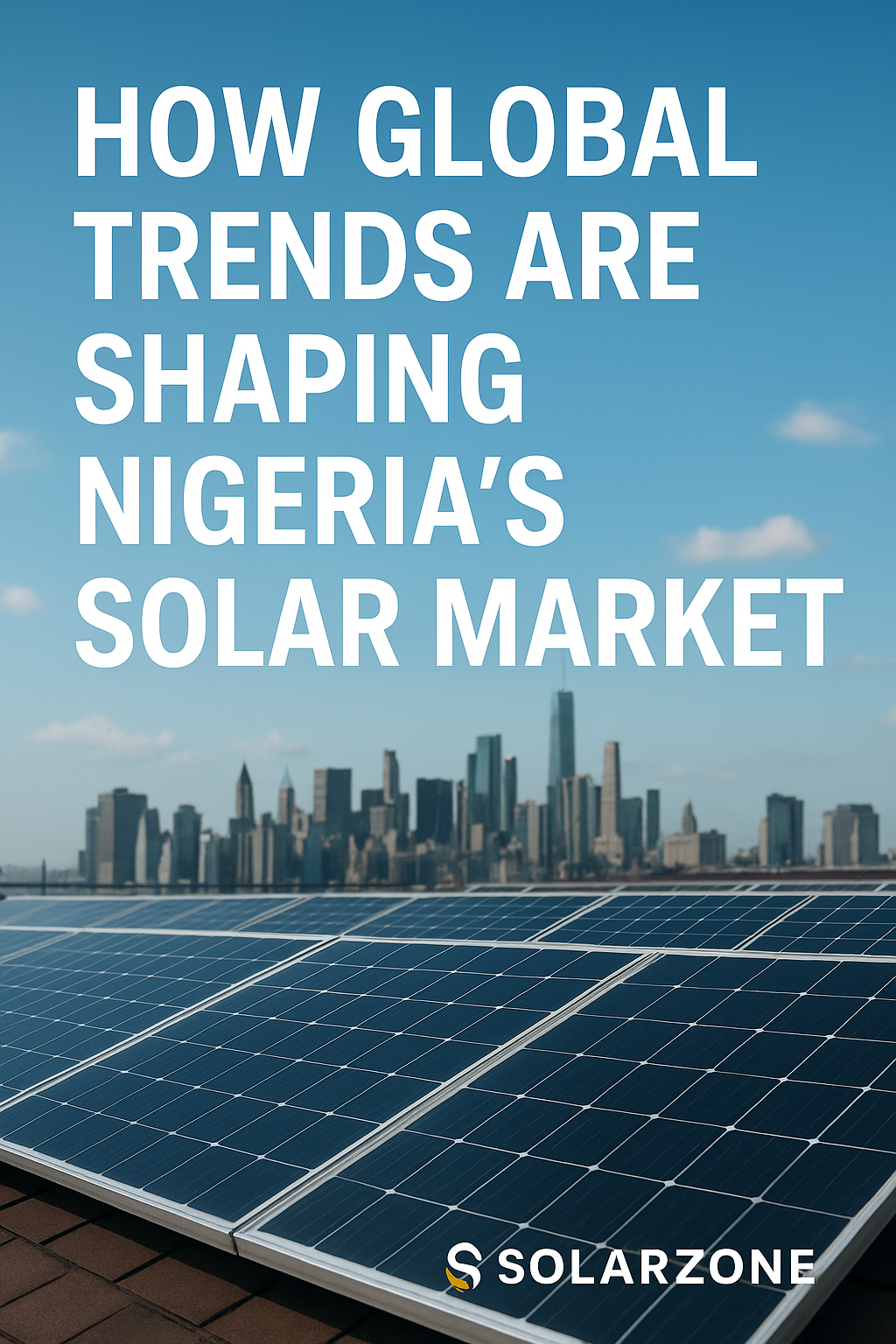
The global shift toward clean energy is accelerating, and Nigeria—Africa’s largest economy—is feeling the impact. From rising technology advancements to international climate agreements and global supply chain changes, several global trends are reshaping how Nigerians adopt and use solar energy.
Understanding these trends helps homeowners, businesses, and industries make informed decisions about their energy future.
🌍 1. Declining Global Prices of Solar Equipment
One of the biggest global trends influencing Nigeria is the continuous drop in the cost of solar panels, inverters, and batteries. In the last decade:
-
Solar panel prices have dropped by over 80%
-
Lithium battery costs have fallen significantly
-
Technology efficiency has doubled
How this affects Nigeria:
-
More Nigerians can afford solar installations
-
Solar companies like Solarzone can offer high-quality systems at competitive prices
-
Businesses can transition to renewable energy with lower upfront costs
⚡ 2. Shift Toward Lithium and Advanced Battery Storage
Globally, the adoption of lithium iron phosphate (LiFePO4) batteries is skyrocketing due to:
-
Longer lifespan
-
Higher efficiency
-
Faster charging
-
Better safety
-
Lower maintenance
Nigeria is catching up fast:
Most modern solar installations now prefer lithium over traditional tubular batteries.
Solarzone uses next-generation battery technology to give customers higher performance and long-term power reliability.
🔧 3. Smarter Solar Systems Driven by IoT and AI
The world is embracing smart energy management through:
-
IoT-enabled inverters
-
AI-based monitoring
-
Remote control mobile apps
-
Real-time fault detection
Impact on Nigeria:
Solar systems are becoming:
-
Easier to maintain
-
More efficient
-
More reliable
-
Better optimized for energy savings
Solarzone installs smart-ready solar systems that allow customers to track and manage their power usage remotely from their phones.
🏢 4. Global Investment in African Renewable Energy
International institutions such as the World Bank, USAID, EU, JICA, and AfDB are investing heavily in Africa’s clean energy transition.
Nigeria is a major beneficiary through:
-
Grants
-
Soft loans
-
Renewable energy development programs
-
Solar mini-grid projects
-
Off-grid community electrification
This funding makes it easier for Nigerians to access affordable solar solutions.
🌡 5. Global Climate Agreements Driving Policy Change
Worldwide agreements like the Paris Climate Accord are influencing Nigeria’s commitment to renewable energy adoption.
Effects on Nigeria include:
-
Better energy policies
-
More incentives for solar users
-
Increased renewable energy targets
-
Reduced dependence on fossil fuel power
These commitments encourage solar companies, including Solarzone, to scale operations and provide cleaner energy alternatives.
📦 6. Improved Global Supply Chain and Faster Delivery
With global expansion of solar manufacturing, countries like China, the US, India, and Europe produce solar components faster than ever.
Benefits for Nigeria:
-
Faster importation
-
Better product availability
-
Lower equipment shortage
-
More variety in solar product options
Solarzone partners with top global manufacturers to supply Nigerians with durable, weather-resistant solar equipment optimized for Nigerian climate.
🏠 7. Increased Demand for Residential Solar Worldwide
Around the world, homeowners are turning to solar because of:
-
Rising electricity costs
-
Home automation systems
-
Desire for energy independence
This trend has reached Nigeria:
More families are installing solar for:
-
Lighting
-
TVs and fans
-
Freezers and refrigerators
-
Complete home backup
Solarzone offers customizable home solar packages for every budget.
🏢 8. Commercial and Industrial Solar Boom
Globally, industries are switching to solar to reduce operational costs.
In Nigeria:
Hotels, manufacturing plants, hospitals, schools, and cold rooms are adopting solar to cut diesel expenses by 50–70%.
Solarzone delivers tailored commercial solar systems that help Nigerian businesses reduce generator dependency.
🔮 9. What These Global Trends Mean for Nigeria’s Future
-
Solar power will become more affordable
-
Better technology = higher efficiency
-
Larger companies will invest in renewable energy
-
Nigeria will move closer to energy independence
-
Homes and businesses will enjoy more stable electricity
-
Growth of the solar job market across the country
-
More reliable hybrid systems that combine grid + solar + battery
2025 and beyond promise rapid growth for Nigeria’s solar sector.
🔆 Switch to Solar Today With Solarzone
To take advantage of global solar advancements, you need a trusted expert.
Solarzone provides:
✔ Solar panel installation
✔ Inverter and battery sales
✔ Solar maintenance & repairs
✔ Residential solutions
✔ Commercial & industrial projects
With 10+ years of experience, Solarzone delivers reliable systems built for Nigerian conditions.
📞 Contact Solarzone Today
Upgrade to clean, reliable, and affordable power.
📌 Call/WhatsApp: 09091394722